
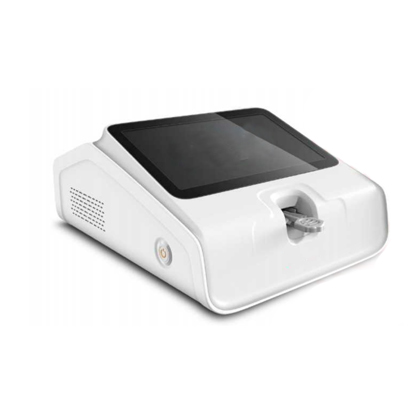
l Micro-Sample Technology
Requires only 20uL of blood,ideal for pediatric and diffi-cult-draw patients.
Application
l ONE-MINUTE TEST
Take PT for examplwith an efficiency of 60 tests per hourbe done in 1 minute detection sample,every thus to shortenafter loading the sathe waiting time.
l One-Touch Operation
Start the test with a single press on the intuitive 7-inch touchscreen.
Technical Parameters | |
Test item | ACT |
Sample size | 20 μ |
Test range | L50-600 s |
Reference range | 80-140 S |
Cardial Surgery | Stroke center |
Anesthesiology department | Nephrology |
Cardiac catheterization | Cardiology |
Emergency | Dialysis |
intervention surgeries | Neurology |
Chest pain center | Surgical operation |
CCU | Lab |
Test items:PT APTT TT FIB ACT
During ECMO
Heparin is the primary anticoagulant. Maintaining an appropriate ACT is crucial. However, optimal anticoagulation management should be guided by a combination of ACT, APTT, and Anti-Xa factor levels,tailored to the patient's specific condition.
Extracorporeal circulation
ACT is the gold standard for anti-coagulation monitoring during extracorporeal circulationDuring extracorporeal circulation or when the surgical field suction is turned on, the ACT moni.toring value should remain above 480 seconds.
Hemodialysis
The "Standard Operating Procedures for Blood Purification" recommend that the coagulation level should be comprehensively evaluated before, during and after blood purification.
Intervention surgeries
During the intervention surgeries (such as radiofrequency ablation, cryoablation, transcatheter aortic valve replacement, percutaneous coronary intervention, endovascular treatment, etc.ACT monitors the dosages of anti-coagulant drugs like heparin and bivalirudin to prevent thrombosis or bleeding complications.
Thrombolytic therapy
The "Guidelines for Rational Drug Use in Thrombolytic Therapy for Acute ST-Elevation Myocardial Infarction [Second Edition)" suggests that the APTT or ACT test should be conducted to provide a baseline reference for subsequent thrombolytic and anticoaqulant treatments.
Preoperative Screening
Coagulation testing is mandatory prior to surgery, it assesses the patient's clotting status, allowing clinicians to adjust medications and mitigate the risk of intraoperative hemorrhage.
Routine Coagulation Testing
ACT is routine test for thrombotic and hemorrhagic diseases, Coagulation function reflects the patient's blood condition, For patients with bleeding symptoms, coagulation indicators such as PT, APTT, FIB, TT, etc, need to be tested upon admission to rule out abnormal coagulation function caused by reduced coagulation factor